หน้าแรก
» ค้นพบ
»
Vinyl Is Back: A Practical Guide to the Resurgence of Physical Media
Vinyl Is Back: A Practical Guide to the Resurgence of Physical Media
Streaming remains the default way most people access music and movies, but physical media has not disappeared. In music, it has moved back into meaningful growth; in home video, the broad market is smaller, yet premium collector formats still have a committed audience. The practical takeaway is simple: physical media now works best as a deliberate complement to streaming rather than a universal replacement for it.
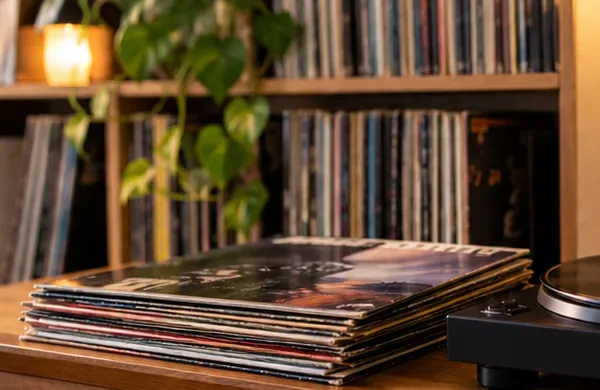
A stack of vinyl records sits beside a turntable in a home listening space, highlighting the tactile appeal and storage demands of physical music.
Physical media in 2026: the quick reference
The strongest comeback is in recorded music. The Recording Industry Association of America reported that U.S. vinyl wholesale revenue reached about $1.04 billion in 2025, up 9.3% from 2024, while total U.S. physical music revenue rose 5.0%. RIAA also counted 19 consecutive years of vinyl revenue growth. Its 2025 report is available in the RIAA year-end recorded music revenue report.
The pattern is global, but it is not identical in every market. IFPI reported that worldwide physical music revenue grew 8.0% in 2025 to $5.3 billion. Vinyl revenue rose 13.7%, and CD and music-video revenue also increased globally. At the same time, RIAA's U.S. data showed CD revenue falling 7.8% in 2025. That contrast matters: a “physical media comeback” is real, but the winning format depends on country, audience, artist, and use case. See the IFPI Global Music Report 2026 summary.
Movies tell a different story. DEG: The Digital Entertainment Group reported that U.S. spending on DVD, Blu-ray, and 4K UHD physical products declined by less than 10% in 2025, while the much smaller premium 4K UHD category finished the year up 12%. In other words, physical video is not broadly returning to its old scale, but premium discs are showing collector resilience. The figures are in DEG's Year-End 2025 Digital Media Entertainment Report.
Which physical format fits your goal?
Format
Best for
Main strengths
Main trade-offs
Vinyl LP
Album-focused listening, artwork, collecting
Large packaging, tactile ritual, active new-release market
Higher hardware and storage needs; condition and setup affect playback
CD
Affordable ownership, compact storage, easy ripping where lawful
Consistent digital playback, small footprint, large used market
Smaller artwork; some new releases are easier to find on vinyl than CD
High-bitrate video and audio, often includes extras
Requires compatible player and display; releases can be expensive or limited
Blu-ray / DVD
Building a movie library economically
Large catalog, used copies widely available, offline playback
Lower resolution than 4K UHD; some editions have fewer extras or older transfers
If you mainly want better music ownership
Choose vinyl when the object is part of the experience
Vinyl makes the most sense when you value album art, liner notes, sequencing, and the act of listening to a whole side. It is also the format receiving the strongest growth in the current music market. That does not mean vinyl is automatically the highest-fidelity option. Sound quality depends on the mastering, pressing quality, cartridge, tonearm setup, phono stage, speakers, room, and record condition. A well-mastered CD can outperform a poor pressing, and vice versa.
Before buying a turntable, check the complete signal chain. Some turntables have a built-in phono preamp; others need an external one or an amplifier with a phono input. Budget for a stylus, a stable surface, and vertical record storage rather than spending everything on the player itself.
Choose CD when value and reliability matter more than ritual
CD remains one of the most practical ownership formats. Used discs can be inexpensive, storage density is high, and playback does not involve a stylus touching a groove. A CD collection can also make sense for people who want a stable personal library without depending on whether an album stays available on a subscription service.
The main limitation is availability: some artists now emphasize vinyl or digital releases, and region-specific editions vary. If you buy used, inspect the playing surface under angled light, check that the center hub is intact, and confirm that multi-disc sets actually contain every disc.
Choose cassette only when its limitations are part of the appeal
Cassettes have returned as a niche collectible, especially for limited runs and independent releases. They are not the most convenient format for a new general-purpose library. Tape can stretch or degrade, decks require mechanical maintenance, and replacement hardware is less standardized than CD or vinyl equipment. Treat cassette buying as a specific collecting choice, not a default recommendation.
If your goal is a movie library you can keep
Physical film and TV media has a different value proposition from physical music. The strongest reason to buy is control over a specific edition: a disc can preserve access to a particular transfer, commentary track, documentary, subtitle set, or cut even if streaming catalogs change. That does not make every disc edition definitive. Transfers, audio mixes, region coding, HDR formats, subtitle options, and bonus features differ by release.
สำหรับโฮมเธียเตอร์ 4K UHD เป็นตัวเลือกที่ดีที่สุดเมื่อภาพยนตร์มีคุณภาพการถ่ายทอดสูง และเครื่องเล่น จอแสดงผล เครื่องรับสัญญาณ และสายเคเบิลของคุณรองรับมาตรฐานที่จำเป็น สำหรับคลังภาพยนตร์ขนาดใหญ่ Blu-ray มาตรฐานมักจะให้ความสมดุลที่ดีกว่าในด้านคุณภาพ ราคา และความหลากหลายของภาพยนตร์ DVD ยังคงมีคุณค่าสำหรับภาพยนตร์ที่ไม่มีการวางจำหน่ายแผ่นใหม่ หรือเมื่อราคามีความสำคัญมากกว่าความละเอียด