หน้าแรก
» วิธีการ
»
How to Clean White Running Shoes: The Safest Method and When to Use Alternatives
How to Clean White Running Shoes: The Safest Method and When to Use Alternatives
Current guidance as of September 2026: there has not been a broad shift toward throwing running shoes in the washer. adidas published an updated running-shoe cleaning guide on June 15, 2026, while its general care guidance, Nike, and Brooks still point most owners toward gentle hand cleaning and room-temperature air drying. The practical takeaway is simple: use hand cleaning as the default, then follow model-specific instructions if your exact shoe says something different. See the current adidas running-shoe cleaning guide, adidas sneaker-care guidance, Nike shoe-cleaning instructions, and Brooks running-shoe care guidance.
White running shoes are harder to keep bright because every splash, road film, grass mark, and dried mud spot is visible. The temptation is to use stronger chemicals or a washing machine. That can make a shoe look cleaner faster, but it also increases the chance of fading, distorted foam, stretched fabric, or unnecessary wear. The best method depends on how dirty the shoes are and what the upper is made from.
Which cleaning method should you choose?
Method
Best for
Main advantage
Main tradeoff
Recommendation
Dry brushing
Dust, dried mud, trail grit
Almost no moisture exposure
Will not remove set-in stains
Use first, even if you plan a deeper clean
Spot cleaning
Fresh scuffs or small marks
Fast and low-risk
Can leave the rest of a white upper looking uneven
Best for routine upkeep between deeper cleans
Hand cleaning
Most mesh, knit, and synthetic running shoes
Good control over water, detergent, and pressure
Takes more time and requires air drying
The safest default for most white running shoes
Machine washing
Only models whose manufacturer explicitly permits it
Convenient for a thoroughly dirty shoe
More agitation and water exposure; many brands advise against it
Do not use unless your exact model instructions allow it
Strong whitening products
Very limited material-specific cases
Can attack stubborn discoloration
Higher risk of color change or material damage
Avoid bleach and harsh cleaners unless the manufacturer specifically approves them
A useful example of why model-specific care matters: adidas' general sneaker guidance says not to machine wash shoes, but its official 4DFWD care article describes a cold, delicate machine-wash option for that particular construction. That is an exception, not a universal rule for white running shoes.
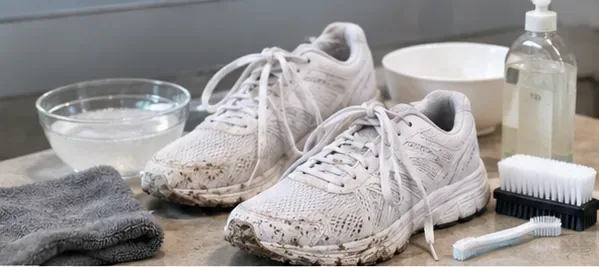
What you need for the safest general method
A soft-bristle shoe brush or clean soft toothbrush
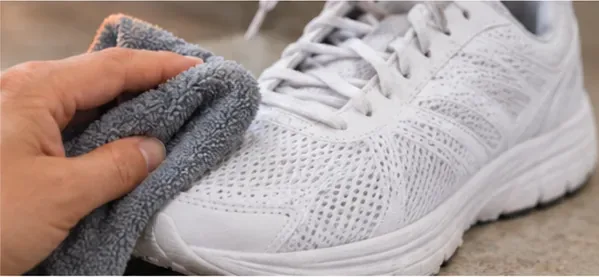
Two clean microfiber cloths or soft washcloths
A small bowl of lukewarm water
A small amount of mild laundry detergent or mild dish soap
White paper towels or a clean dry cloth for shaping while drying
For white shoes, mild does not mean ineffective. The goal is to loosen dirt without soaking the cushioning or aggressively abrading mesh. Nike specifically recommends a mild cleaning solution and warns that highly concentrated dishwashing liquid can discolor some materials or strip natural oils. adidas also advises against bleach and other harsh chemicals.
Start with mild supplies and check the shoe materials before using water or cleaner.
How to clean white running shoes in 8 steps
1. Check the material and the exact model instructions
Before getting the shoes wet, identify the upper. Most modern road-running shoes use engineered mesh, knit, or synthetic overlays, but some pairs include leather or suede details. Mesh and knit usually tolerate gentle damp cleaning. Leather needs material-appropriate care, while suede and nubuck can show water marks and deserve a separate suede-specific method.
If the brand publishes care instructions for your exact shoe, those instructions take priority over any general guide. This is especially important for specialty midsoles, waterproof membranes, bonded overlays, and shoes that explicitly allow or prohibit machine washing.
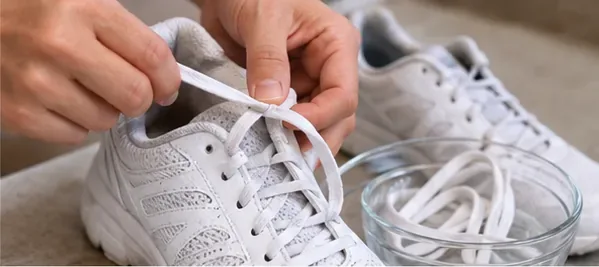
2. Remove the laces and removable insoles
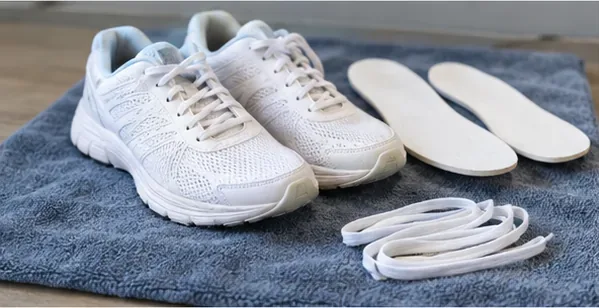
Take out the laces so you can reach the tongue, eyelets, and mesh beneath them. Remove the insoles only if they are designed to come out easily; do not force a liner that appears glued in place. Cleaning and drying these pieces separately also keeps trapped moisture from lingering inside the shoe.
Removing laces and insoles opens the upper for more even cleaning and lets each part dry separately.
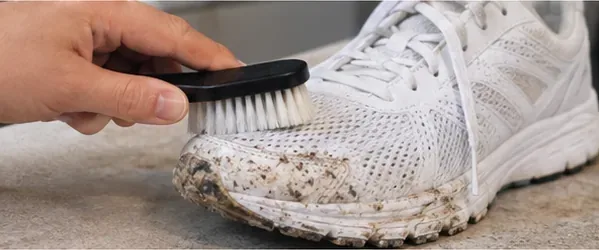
3. Dry-brush loose dirt before adding water
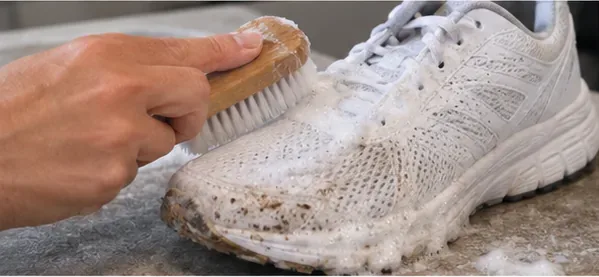
If the shoes are muddy, let the mud dry first. Then knock the soles together gently outdoors and use a soft brush to remove loose grit from the outsole, midsole edge, and upper. This first pass matters because adding water to a layer of dry dirt can spread it into a larger stain.
Use lighter pressure on mesh than on the rubber outsole. Brooks recommends brushing caked dirt from the bottom before moving on to damp cleaning, and adidas similarly starts with removing surface dirt.
Brush off dry dirt first so you do not turn loose grit into muddy residue while washing.
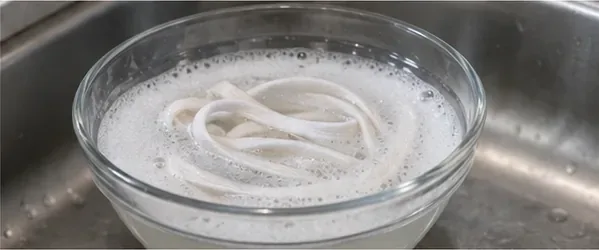
4. Wash the laces separately
Place the laces in a small bowl of lukewarm water with a small amount of mild soap. Work the solution through them gently, rinse until the water runs clear, and lay them flat to air dry. If the laces are frayed, permanently gray, or structurally damaged, replacement may make more sense than increasingly aggressive whitening.
For insoles, be more conservative: wipe or lightly hand-clean them with a damp cloth and mild solution, then let them dry completely outside the shoes. Avoid soaking foam insoles unless the manufacturer says it is safe.
Laces can be washed separately with a small amount of mild soap, then rinsed and air-dried.