Golang เช่นเดียวกับภาษาการเขียนโปรแกรมอื่นๆ ส่วนใหญ่มี คำ สั่งสวิตช์คำสั่ง switch ในGolang ช่วยให้คุณสามารถประเมินตัวแปรหรือนิพจน์ได้หลายกรณี และมักใช้เมื่อเขียนคำสั่ง if-else หลายคำสั่งซึ่งทำให้โค้ดดูไม่สวยงามและซ้ำซาก
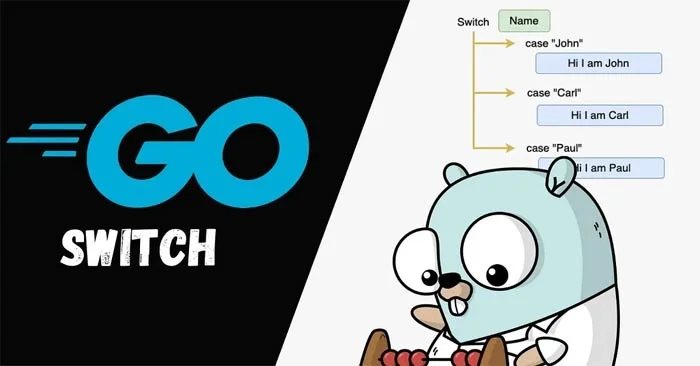
ใน Go คำสั่งสวิตช์เป็นคำสั่งการแยกสาขาหลายทิศทางที่มีประสิทธิภาพในการกำหนดทิศทางการดำเนินการตามค่า (หรือประเภท) ของนิพจน์ มีคำสั่งสวิตช์สองประเภทหลักใน Go :
- สวิตช์การแสดงออก
- ประเภทสวิตช์
ตัวอย่างเช่น:
package main
import "fmt"

func main() {
    day := 4
    switch day {
    case 1:
        fmt.Println("Monday")
    case 2:
        fmt.Println("Tuesday")
    case 3:
        fmt.Println("Wednesday")
    case 4:
        fmt.Println("Thursday")
    case 5:
        fmt.Println("Friday")
    default:
        fmt.Println("Invalid day")
    }
}
ไวยากรณ์คำสั่งสลับใน Golang
switch optstatement; optexpression {
case expression1:
    // Khối code
case expression2:                                                          # Expression Switch
    // Khối code
default:
    // Khối code
}

switch var := interfaceValue.(type) {
case type1:
    // Khối code
case type2:                                                                    # Type Switch
    // Khối code
default:
    // Khối code
}
สวิตช์การแสดงออก
Expression Switchจะประเมินนิพจน์และสลับไปที่กรณีตามค่าของนิพจน์นั้น ถ้าไม่ได้ระบุการแสดงออกสวิตช์ จะ ตั้งค่าเริ่มต้นเป็นtrue
ไวยากรณ์
switch optstatement; optexpression {
case expression1:
    // Khối code
case expression2:
    // Khối code
default:
    // Khối code
}
optstatement:คำสั่งเสริม (เช่น การประกาศตัวแปร)
optexpression:นิพจน์เสริม (ถ้าละเว้น ค่าเริ่มต้นจะเป็นtrue )
ตัวอย่างพร้อมคำสั่งเสริม
ที่นี่จะแนะนำคำสั่งเสริมที่ประกาศตัวแปรวัน จากนั้น คำสั่งสวิตช์จะประเมินวันตามกรณีที่แตกต่างกัน
package main
import "fmt"
func main() {
    switch day := 4; day {
    case 1:
        fmt.Println("Monday")
    case 2:
        fmt.Println("Tuesday")
    case 3:
        fmt.Println("Wednesday")
    case 4:
        fmt.Println("Thursday")
    case 5:
        fmt.Println("Friday")
    default:
        fmt.Println("Invalid day")
    }
}
ผลลัพธ์:
Thursday
ตัวอย่างที่มีนิพจน์เสริม
ถ้าไม่มีการระบุนิพจน์คำสั่งสวิตช์ใน Golangจะถือว่านิพจน์นั้นเป็นจริง สิ่งนี้ช่วยให้เราสามารถใช้เงื่อนไขแบบบูลีนในคำสั่ง case ได้
package main
import "fmt"

func main() {
    day := 4

    switch {
    case day == 1:
        fmt.Println("Monday")
    case day == 4:
        fmt.Println("Thursday")
    case day > 5:
        fmt.Println("Weekend")
    default:
        fmt.Println("Invalid day")
    }
}
ผลลัพธ์
Thursday
ประเภทสวิตช์
สวิตช์ประเภทใช้ในการแยกสาขาตามชนิดของค่าอินเทอร์เฟซ แทนที่จะเป็นค่าของมัน สิ่งนี้มีประโยชน์อย่างยิ่งเมื่อต้องจัดการกับตัวแปรที่มีประเภทที่ไม่รู้จัก
ไวยากรณ์
switch var := interfaceValue.(type) {
case type1:
    // Khối code
case type2:
    // Khối code
default:
    // Khối code
}
ตัวอย่างเช่น:
ตัวอย่างนี้ใช้ตัวแปร วันเดียวกันแต่รวมอยู่ในinterface{}เพื่อแสดงการแปลงประเภท
package main
import "fmt"
func main() {
    var day interface{} = 4
    switch v := day.(type) {
    case int:
        switch v {
        case 1:
            fmt.Println("Monday")
        case 2:
            fmt.Println("Tuesday")
        case 3:
            fmt.Println("Wednesday")
        case 4:
            fmt.Println("Thursday")
        case 5:
            fmt.Println("Friday")
        default:
            fmt.Println("Invalid day")
        }
    default:
        fmt.Printf("Unknown type: %T\n", v)
    }
}
ผลลัพธ์:
Thursday